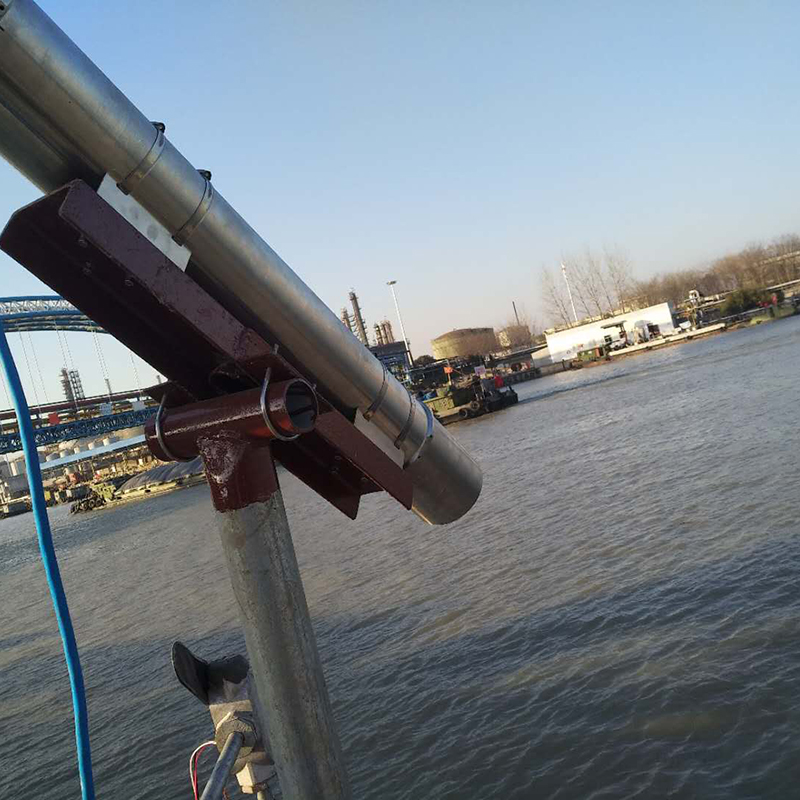
Lessons from refinery applications, including China National Petroleum Corporation
The Hidden Risk at Refinery Water Interfaces
Refineries and oil terminals operate at the intersection of complex industrial processes and sensitive water environments: cooling systems, wastewater discharge channels, stormwater networks and intake basins form critical interfaces where hydrocarbons and water coexist often under high operational pressure.
Even minor leaks of oil or fuel, if undetected, can migrate rapidly through drainage systems, contaminate surface waters and trigger serious environmental, regulatory and operational consequences. In highly regulated industrial zones, delayed detection is no longer acceptable. Continuous water monitoring has therefore become a fundamental component of modern refinery risk management.
Why Intermittent Monitoring Is No Longer Sufficient
Traditional water monitoring approaches in refineries often rely on periodic sampling, visual inspections or contact-based probes installed at limited points. While these methods can identify contamination after it occurs, they present several limitations:
- Delayed detection, allowing spills to spread beyond containment areas,
- Limited spatial coverage, especially in open basins or channels,
- High maintenance requirements, particularly in harsh industrial environments,
- Inability to detect thin oil films, especially during early-stage leaks.
In facilities handling large volumes of hydrocarbons, these gaps increase both environmental exposure and compliance risk. Continuous, real-time monitoring addresses these challenges by providing immediate awareness of contamination events as they occur.
Continuous Water Monitoring: A Shift Toward Prevention
Modern refineries increasingly adopt continuous water monitoring systems not only to respond to incidents, but to prevent escalation. Early detection allows operators to:
- Isolate affected process units,
- Stop or reroute discharge flows,
- Deploy containment measures immediately,
- Document incidents accurately for regulatory reporting.
This proactive approach reduces cleanup costs, minimizes downtime, and protects surrounding ecosystems while strengthening environmental governance and ESG performance.
Optical, Non-Contact Detection in Refinery Environments
One of the key challenges in refinery water monitoring is the need for reliable detection without introducing intrusive equipment into already complex infrastructures.
Optical, non-contact oil detection systems address this by monitoring the water surface remotely. Using UV-induced fluorescence, these systems identify hydrocarbons based on their unique optical signatures, allowing detection of oil films down to micrometer thickness without physical contact with the water.
This approach eliminates issues such as sensor fouling, calibration drift, and mechanical wear, common problems in contact-based probes operating in industrial wastewater channels.
Case Insight: Continuous Monitoring at China National Petroleum Corporation (CNPC)
Large-scale refinery operators such as China National Petroleum Corporation (CNPC) manage extensive water networks across their facilities, including cooling systems, discharge channels and stormwater outlets. In such environments, continuous monitoring is critical to ensure that any hydrocarbon release is detected before it reaches external water bodies.
In refinery applications, optical oil detection systems have been deployed to monitor open channels and discharge points where traditional sensors struggle to provide reliable coverage. By continuously scanning the water surface, these systems enable:
- Immediate detection of oil presence during normal operations
- Early warning of leaks from processing units or storage areas
- Continuous verification of discharge water quality
The use of real-time, non-contact monitoring supports both internal safety protocols and external regulatory compliance, in particular in regions with strict environmental enforcement.
Designed for Harsh Industrial Conditions
Refinery environments impose demanding operational requirements on monitoring equipment. Temperature extremes, corrosive atmospheres, vibration and limited access are common challenges.
Continuous optical monitoring systems designed for industrial use typically feature:
- IP68-rated, hermetically sealed housings
- Wide operating temperature ranges suitable for outdoor installations
- Multiple enclosure options, including stainless steel and explosion-proof ATEX-certified designs
- Flexible power and communication interfaces for integration with existing control systems
These characteristics ensure stable performance over long periods, even in zones classified as hazardous.
Integration into Refinery Control and Response Systems
Continuous monitoring is most effective when integrated into a refinery’s broader operational infrastructure. Real-time oil detection data can be transmitted directly to SCADA or telemetry systems, enabling:
- Automated alarms via SMS or email
- Centralized visualization of contamination events
- Faster coordination between environmental, safety and operations teams
- Detailed incident logs for audits and reporting
This level of integration transforms water monitoring from a passive compliance task into an active safety and environmental management tool.
Protecting Operations, Compliance, and the Environment
For refineries and oil terminals, continuous water monitoring is no longer a supplementary measure. It is a strategic necessity.
Early detection of hydrocarbon contamination protects sensitive water bodies, reduces operational risk, and demonstrates a strong commitment to environmental responsibility.
As refinery operations grow more complex and regulatory expectations increase, real-time, non-contact monitoring technologies provide the reliability and precision required to manage water-related risks effectively.
By shifting from periodic checks to continuous surveillance, refineries can move from reactive response to true environmental prevention where even the smallest spill is detected before it becomes a larger problem.