Environmental compliance has become a continuous responsibility for industrial operators. Across sectors such as energy, maritime infrastructure and water management, the ability to monitor and control contamination in real time is now a key operational requirement.
Hydrocarbon pollution remains one of the most critical risks. It can originate from routine activities, small equipment leaks or unexpected incidents, often developing without immediate visibility.
In this context, early detection is not just about identifying a problem. It is about maintaining control over complex systems where environmental performance and operational continuity are closely connected.
Enabling Real-Time Environmental Compliance Across Industrial Environments
Industrial environments differ in structure and function, but they share a common challenge: ensuring that water leaving the site meets environmental standards at all times.
Compliance is no longer based solely on periodic verification. It requires continuous awareness of conditions at key interfaces, such as discharge points, open channels and surface water areas.
ROW systems enable this level of control by providing uninterrupted monitoring of water surfaces. Instead of relying on delayed analysis or manual inspection, operators gain immediate visibility of potential contamination, allowing faster and more informed responses.
This approach supports a shift from static compliance models to dynamic environmental management.
A Cross-Industry Approach to Environmental Monitoring
One of the key strengths of ROW technology is its adaptability across different industrial contexts. While each sector has specific processes and risks, the need for reliable surface monitoring remains consistent.
Energy and Power Generation
In power generation facilities, water systems are integral to daily operations. Cooling circuits, discharge channels and hydraulic components all interact with water environments where oil contamination may occur.
Monitoring these areas continuously allows operators to detect anomalies early and maintain control over discharge quality without interrupting operations.
Ports and Maritime Operations
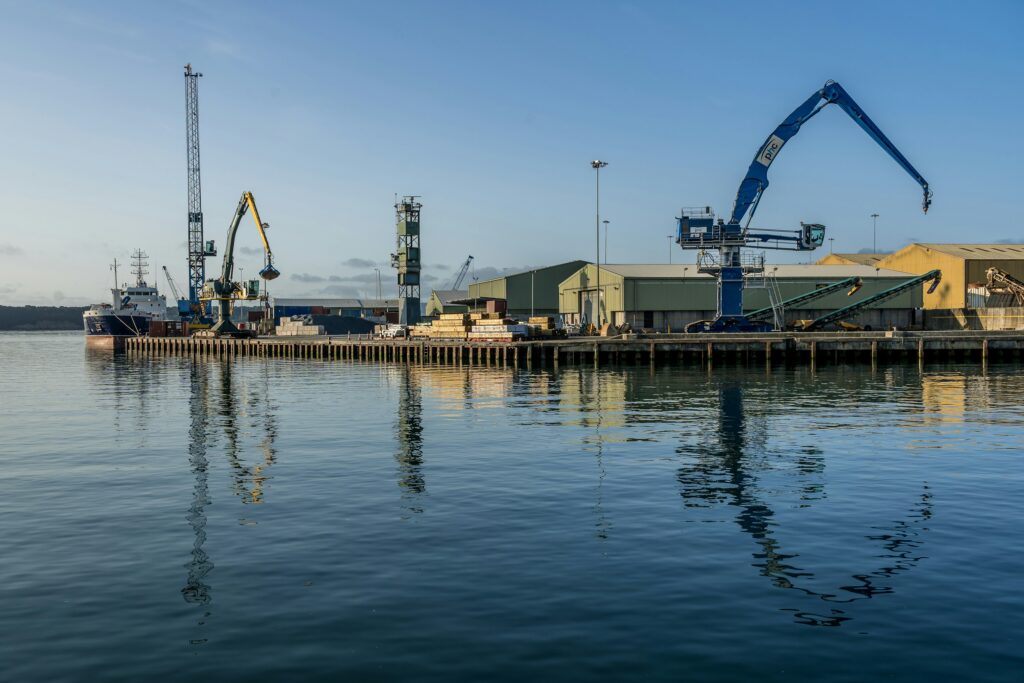
Ports operate in open and highly dynamic environments, where multiple activities take place simultaneously. Fuel handling, vessel traffic and transfer operations introduce constant variability and risk.
In these settings, maintaining environmental compliance depends on the ability to observe surface conditions in real time and respond immediately to unexpected events.
Industrial Processing and Petrochemical Sites
Facilities handling hydrocarbons face inherent exposure to contamination risks. Drainage systems and water interfaces can act as pathways through which oil reaches external environments.
Continuous monitoring at these transition points allows operators to maintain oversight where it matters most, reducing dependency on downstream corrective actions.
Water and Wastewater Infrastructure
In municipal and industrial water systems, inflows often combine multiple sources, making contamination patterns difficult to predict.
Real-time monitoring introduces stability into this complexity. By providing continuous feedback on surface conditions, it helps operators maintain treatment performance and ensure that discharge remains within regulatory limits.
Aligning with Evolving Compliance Frameworks
Regulatory expectations are evolving toward greater transparency and accountability. Operators are increasingly required to demonstrate not only that systems are in place, but that they are effective over time.
This includes the ability to:
- Monitor continuously rather than periodically
- Detect low-level contamination events
- Respond without delay
- Maintain records of environmental performance
ROW systems contribute to these requirements by generating consistent, real-time data that supports both operational decisions and compliance documentation.
Instead of treating compliance as a separate process, monitoring becomes embedded in daily operations.
Technology Designed for Operational Continuity
In many industrial environments, monitoring systems must operate under challenging conditions, including exposure to weather, temperature variations and potential fouling.
ROW technology is designed to function without direct contact with the water surface. This reduces the impact of environmental factors that typically affect conventional sensors and allows for more stable long-term performance.
The ability to maintain continuous operation with minimal intervention is essential in facilities where access may be limited or where interruptions can affect production.
From power plants to ports, industrial facilities operate in environments where water plays a central role and where contamination risks cannot be eliminated entirely.
What can be controlled is how quickly and effectively these risks are identified and managed.
ROW systems provide the continuous visibility needed to support this control across different sectors and regulatory contexts. By enabling real-time monitoring, they help transform compliance into an active, integrated process that supports both environmental protection and operational stability.
In an increasingly demanding regulatory landscape, this level of awareness is essential for long-term resilience.