From LiDAR research in 1991 to today’s real-time ROW oil detection systems
The story of remote optical monitoring at Laser Diagnostic Instruments AS (LDI) began in 1991 with advanced research into LiDAR (Light Detection and Ranging) technologies. At the time, laser-based remote sensing was primarily associated with atmospheric and environmental measurements.
LDI’s early work focused on understanding how laser-induced fluorescence and optical backscattering could be used to detect substances remotely without direct physical sampling. These foundational developments laid the groundwork for what would later become highly specialized industrial monitoring systems.
From the outset, the guiding principle was clear: remote optical detection can provide faster, safer, and more reliable environmental monitoring than traditional contact-based methods.
From Research to Industrial Application
Throughout the 1990s and early 2000s, LDI refined its expertise in laser-based sensing and fluorescence analysis. As industrial demand for reliable environmental monitoring grew, the company shifted from purely research-oriented applications toward practical field solutions.
Oil spill detection became a key focus area. Industrial operators required:
- Continuous monitoring
- Early-stage detection of thin oil films
- Reduced maintenance compared to contact probes
- Reliable performance in harsh outdoor environments
Traditional sensors, often based on floating probes or sampling methods, struggled with fouling, calibration drift and delayed detection. Optical remote sensing offered a fundamentally different approach. This transition marked a critical turning point: the move from scientific instrumentation to robust, industrial-grade monitoring systems.
The Birth of ROW: Remote Optical Watcher
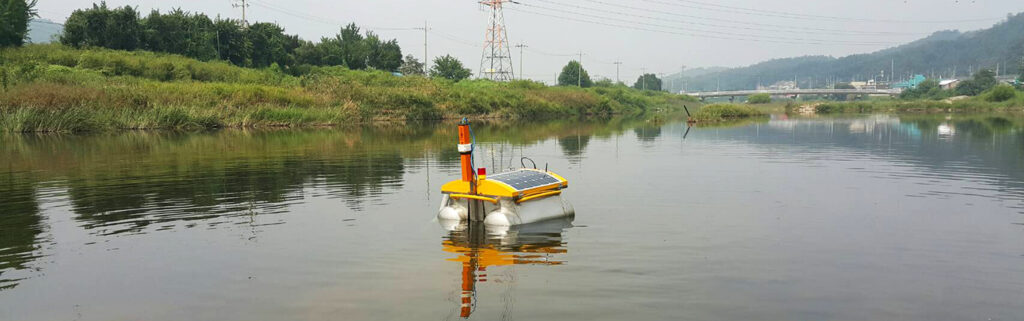
Building on decades of optical sensing experience, LDI introduced the ROW (Remote Optical Watcher) system. An autonomous, non-contact oil spill detection sensor designed specifically for industrial and marine environments.
Unlike traditional probes, ROW operates above the water surface, using UV-induced fluorescence to detect hydrocarbons. When ultraviolet light illuminates oil on water, the hydrocarbons emit a distinct fluorescent signature. This signature is captured and analyzed in real time.
The advantages of this approach are significant:
- Detection of oil films as thin as 1 micron
- No physical contact with water
- Minimal maintenance requirements
- Continuous 24/7 monitoring
- Compatibility with SCADA and telemetry systems
What began as laser-based remote sensing research evolved into a practical tool capable of protecting ports, refineries, hydroelectric plants, wastewater facilities and coastal ecosystems worldwide.
Engineering for Real-World Conditions
Over the past three decades, LDI’s innovation has not only focused on optical sensitivity but also on industrial reliability.
Modern ROW systems feature:
- IP68-rated hermetically sealed enclosures
- Stainless steel and ATEX-certified explosion-proof options
- Wide operating temperature ranges
- Low power consumption for remote or off-grid installations
This combination of advanced optics and rugged mechanical engineering ensures stable performance in environments ranging from Arctic harbours to desert refineries.
The evolution from laboratory laser systems to field-proven industrial sensors reflects LDI’s long-term commitment to practical innovation.
Expanding Applications Across Industries
As ROW technology matured, its applications expanded beyond traditional marine spill detection. Today, remote optical monitoring supports:
- Oil terminals and refineries
- Hydroelectric turbine protection
- Wastewater treatment plants
- Coastal and port infrastructure
- Municipal water utilities
The core principle remains unchanged: early detection prevents escalation.
By enabling real-time alerts and seamless digital integration, modern remote optical systems transform environmental monitoring from a reactive process into a preventive strategy.
Three Decades of Continuous Innovation
Over 30 years, LDI has transitioned from LiDAR research pioneers to global providers of industrial remote optical monitoring systems.
This evolution reflects more than technological advancement. It demonstrates a consistent philosophy:
- Replace manual sampling with continuous surveillance
- Replace delayed response with real-time awareness
- Replace reactive cleanup with preventive protection
As environmental standards tighten and infrastructure grows more complex, the need for reliable, autonomous monitoring solutions continues to increase.
The journey that began with laser research in 1991 now supports industries worldwide in protecting water resources with precision and confidence.