In continuous oil spill monitoring, sensitivity alone is not enough. A sensor must detect small quantities of hydrocarbons while avoiding alarms caused by normal changes in the monitored environment.
This becomes particularly challenging in industrial and outdoor applications, where ambient light, fluorescent materials and changing environmental conditions can interfere with optical measurements.
UV-induced fluorescence provides a selective approach: instead of detecting a generic change at the water surface, it measures the fluorescence response associated with compounds present in oils. But optical selectivity alone is not sufficient. Reliable detection also depends on how the sensor interprets the fluorescence signal in relation to its optical background.
From Detecting a Change to Identifying a Fluorescence Response
Many conventional monitoring methods respond to changes in a physical property of the water or its surface. Turbidity-based measurements, for example, can be influenced by suspended particles and sediment. Contact sensors can also be affected over time by deposits or biological growth.
For oil detection, this creates an important engineering problem: a change in the measurement does not necessarily indicate the presence of hydrocarbons.
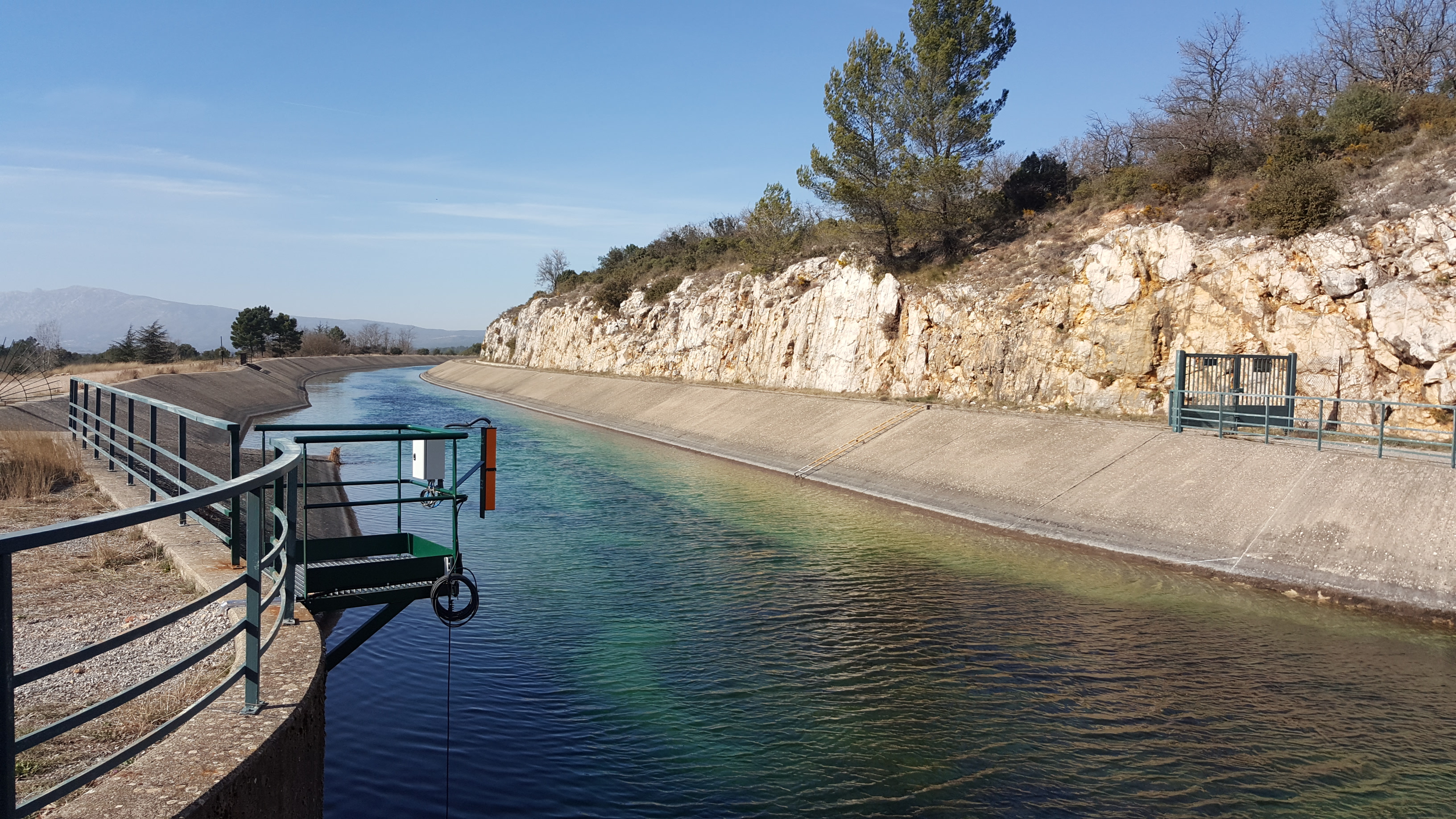
ROW directs pulsed UV light toward the water surface. Oil molecules absorb this radiation and emit fluorescence, which is collected by the receiving telescope and processed by the sensor’s integrated electronics.
Optical filters help isolate the relevant fluorescence wavelengths, improving selectivity. However, other fluorescent materials within the sensor’s field of view and variations in ambient light can still influence the measurement. For this reason, ROW does not rely on fluorescence intensity alone.
Signal and Background: How ROW Evaluates a Potential Alarm
ROW measures two parameters: Signal (S) and Background (B).
This distinction allows the algorithm to evaluate whether an increase in fluorescence is consistent with an oil spill or more likely to originate from another source.
For example, plastics are petroleum-derived materials and can fluoresce within a similar signal range to oil. At the same time, however, many plastics reflect light much more strongly than oil or the surrounding water. As a result, they can produce a significantly larger increase in the Background value. ldi.ee
During an actual oil spill, the fluorescence Signal can enter the configured alarm range while the Background typically changes only slightly. The ROW algorithm compares the Background before and after the Signal enters this range.
If the change exceeds the configured Max change in Bkg parameter, the event is treated as a false alarm and the alarm output is not triggered. ldi.ee
This adds another decision layer to the optical filtering: the system evaluates not only how much fluorescence is detected, but also what is happening to the surrounding optical background at the same time.
Non-Contact Detection Removes Another Source of Variability
The optical approach also changes the physical relationship between the sensor and the monitored water.
ROW operates above the surface rather than requiring the sensing element to remain immersed. This avoids direct contact between the optical sensor and the monitored medium.
For contact-based instruments, deposits and biological growth on the sensing surface can progressively alter measurements. A non-contact optical configuration removes this direct fouling mechanism from the detection process.
This becomes particularly relevant in seawater, wastewater, industrial basins and other installations where continuous monitoring may be required over long periods.
False-Alarm Reduction Is a System-Level Process
Reliable oil spill detection is therefore not based on fluorescence sensitivity alone.
In ROW, UV-induced fluorescence provides optical selectivity, filters isolate the relevant wavelengths, and the internal algorithm compares fluorescence Signal with changes in Background before generating an alarm.
This combination helps the system distinguish a hydrocarbon event from fluorescent objects, ambient interference and other changes within its field of view.
For engineers, this distinction is critical. The objective is not simply to detect the smallest possible signal, but to maintain detection sensitivity while reducing the probability that an unrelated optical event is interpreted as an oil spill.