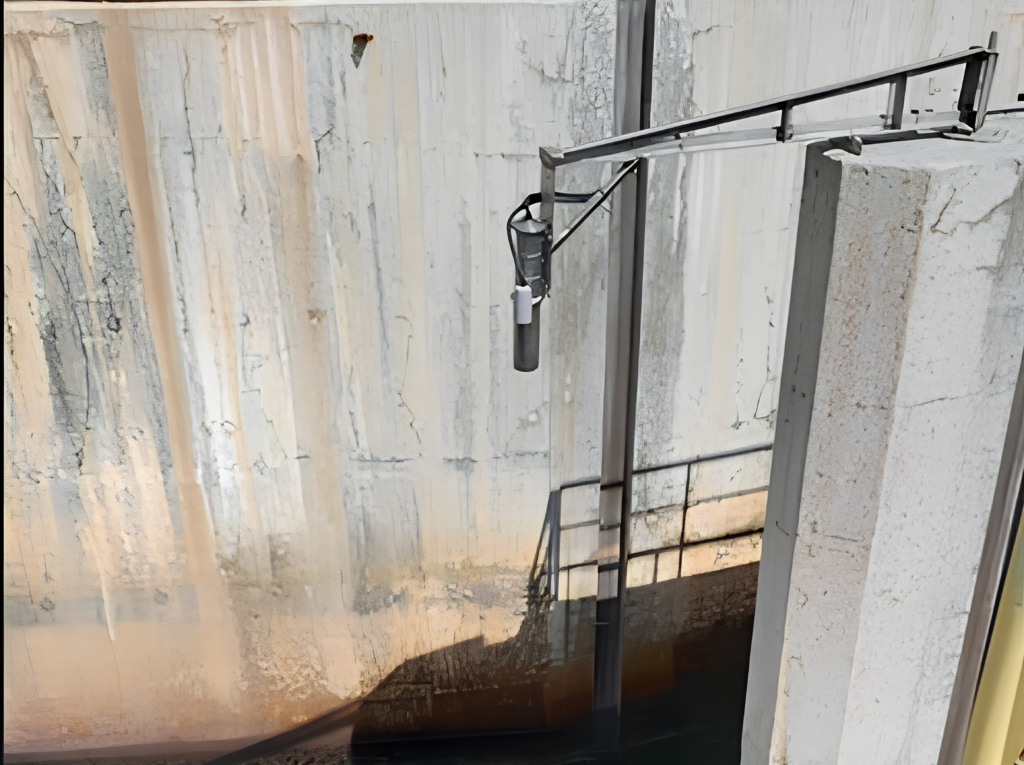
UV-induced fluorescence provides a highly selective method for detecting hydrocarbons on water. In outdoor installations, however, the fluorescence signal is never measured in a perfectly controlled environment.
One of the variables that must be managed is sunlight.
At specific times during a day, solar reflections from the water surface can increase the optical background reaching the photodiode. The result is an increase in signal noise that can make it more difficult to distinguish genuine hydrocarbon fluorescence from the ambient light. For an instrument designed for continuous outdoor monitoring, managing this variability is therefore as important as achieving high signal sensitivity.
When Sunlight Becomes Signal Noise
The effect of sunlight is not necessarily constant throughout the day. As the position of the sun changes relative to the sensor and water surface, reflected light can temporarily increase the background signal. Water ripples and changing surface geometry can further influence these reflections.
From a signal-processing perspective, the challenge is to separate two different behaviours: environmental background changes, which generally develop gradually as operating conditions change; and hydrocarbon events, which typically produce a much faster increase in the detected fluorescence signal.
This distinction is important because increasing sensitivity alone does not solve the problem. A reliable detector must also maintain sufficient separation between useful fluorescence information and environmental noise.
From Optical Protection to Signal Processing
LDI has addressed solar interference at both hardware and software level when comes to our ROW sensors. From the hardware side, optical filters are used to limit the wavelength impacting the photodiode. At the same time, external features of the ROW include using a sunshield, an extension designed to reduce direct solar interference reaching the optical measurement area.
However, physical shielding addresses only part of the problem.
The ROW also uses signal-processing functions designed to compensate for changing background conditions. Background signal compensation can filter constant components of the fluorescence signal and slow variations assumed to originate from environmental factors rather than an oil spill.
Rapid increases in fluorescence remain detectable, allowing the system to respond to the signal behaviour associated with a contamination event. The compensation parameters can also be adjusted according to site conditions, since the optical background of a sheltered industrial basin can differ significantly from that of an exposed marine installation.
LDI fully understands this is an on-going challenge given the technology behind our ROW sensor. We have been continuously developing solutions and have been conducting live trials with clients, particularly at locations where the sun shines more brilliantly than in Northern Europe.
Real-world testing is important because optical background behaviour depends on installation geometry, water surface conditions and local environmental factors that cannot be fully reproduced through laboratory measurements alone.
Detection Reliability Is More Than Sensitivity
For optical oil detection, sensitivity is only one part of performance.
A sensor operating continuously outdoors must also distinguish a real contamination event from variations in the optical background. Hardware design, installation geometry and signal-processing algorithms therefore work together to determine the reliability of the final alarm.
The continued development of the ROW firmware reflects this engineering approach: improving the interpretation of the fluorescence signal under real operating conditions rather than relying on sensitivity alone.